Someone has asked: Why would it be absurd for a philosophical system to reject wholesale the reality of objects of experience?
Disclaimer: The purpose of this paper is not to affirm or deny the existence of a material world, rather, to enquire on philosophical systems’ method of enquiry regarding material world.
It is not really absurd to reject wholesale the reality of objects of experience, i.e. the material world, if absurdity is to be defined as being contrary to reason, as how it is ordinarily defined. If we would say that a philosophical system that denies the existence of the material world is being unreasonable or illogical, it is like saying that philosophical systems such as Idealism and Berkeley’s Subjective Idealism[1] are illogical.
For the purpose of this enquiry, it is of good if we would first clarify two concepts that are used in the question posited – ‘absurdity’ and ‘objects of experience’. The term absurdity, other than the aforementioned, signifies that it is (nearly) impossible for a philosophical system to validly deny the reality of objects of experience. The ‘objects of experience’, on the other hand, are the objects wherein which our ideas are based. These objects are grasped (according to some philosophers) due to experience. Hence, they exist outside of us, as they themselves are not the objects of our thought, rather the objects of the objects of our thought (or the objects of our ideas), and these objects that exist outside of us are (believed to be) composed of matter.[2]
Connecting the term absurdity to the act of denying the reality of material world is rooted from the difficulty in denying the existence of such. The question now is why.
In answering the question, one may argue in terms of ‘self-evidence’; that there is no need to question it (the existence of material reality) because it (simply) is. The human mind has a tendency to presuppose a necessary connection[3] between the objects of thought and the objects of experience.
We certainly cannot deny the existence of the objects of our thoughts (or our ideas) because the mere fact that we can engage in discourses and can think, imagine, will, etc. proves that there are ideas in our minds. We cannot deny them because they are already in us. However, in the event of our certainty regarding the existence of ideas, we presuppose the existence of an external world, which is material, wherein which we necessarily (seem to) base the existence of ideas. We presuppose a necessary connection between the objects of thought and objects of experience as if the objects of experience indeed exist. The question that may be posted is whether the existence of an idea (or an object of thought) must of necessity be attributed as something that is derived from an external world, which is material.
At this point, we may extend the enquiry as to asking whether the external world is material as how most philosophers would claim. Locke and Hume certainly would concur to the idea that the external world is a material world. Even Descartes, a rationalist, believes in such, and he argues so because he believes that we can receive impressions from the material world (only that we can be deceived by our senses). However, if we are to be skeptical as how Descartes and Hume were, we could also be skeptical regarding the existence of a material world. It could be the case that we think that a material world exists because our minds have a propensity to do so – because we can put a necessary connection between the matter and our idea.
When we think of Empiricists such as Locke and Hume, we think of their philosophy as something that considers the proposition “The material world exists” as an axiom. That seems to be what Empiricism professes. However, we could also look at one sort of empiricism that denies the existence of matter – the philosophy of Berkeley.
Berkeley believes that the existence of things, which is sensible, is grasped through perception. However, the existence of these things is not composed of matter but of clusters of sense data or of ideas. Thus, he is saying that what we can only perceive are ideas. This is what we can only claim, for we cannot be certain whether matter exists since it is only the idea that which is in us. Take as an example my perception of a ball. I perceive it because I have an idea of it, but I cannot say that this idea is based on the material object because I do not have the means to prove so. All I have in me and all I can examine is my mere idea of the ball. If we will extend it to us, (Berkeley would say that) we are not composed of matter but of ideas. We are ideas in the mind of God. I cannot even say (according to Berkeley) that my perception of my body implies that my body is composed of matter. All I have is my idea of my body. In this case, Berkeley wholly rejects that the external world is a material world; he argues that the only existents are souls/spirits and ideas.
Surely, we can provide a critique on Berkeley’s philosophy – that it assumes that there is a God; that inability to conceive matter does not imply its non-existence, etc. However, to call a philosophical system such as his as absurd is to be absorbed in the school of thought claiming that material world exists. Furthermore, we cannot disregard his view as it challenges the traditional view regarding matter and the material world. Berkeley’s philosophy is not absurd as it is not illogical, though it may seem so for those who are so absorbed (to the point that they are almost imprisoned) in the previously stated school of thought. In this issue, there is a clash of philosophical frameworks and to term one as absurd is to do an injustice to such philosophy, especially if another framework that contradicts it would be used to criticize it (without understanding it first).
[1] Idealism holds that the reality is consisted of ideas. Berkeley’s Subjective Idealism holds the same thing but focuses more on how an individual perceived an idea. Berkeley is skeptic of the existence of matter as they are inconceivable. What we can only grasp are the objects of our mind.
[2] The term ‘object’ has two senses: it could be used to signify an idea (object of thought) or an object in the material world (object of experience).
[3] a concept borrowed from Hume but used differently
Saturday, February 25, 2006

Friday, February 10, 2006
Can logical principles be falsified by experience?
 An obvious answer to the question is “no”; experience itself tells us that we cannot falsify logical principles through it. Logical principles are almost seen as axiomatic, in such a way that we cannot deny them. However, are we not mistaken in interpreting our experience through reflection or through looking at the external world that experience itself cannot falsify logical principles? If an answer is obvious, it does not follow that it really is the case. Likewise, as Whitehead said, it would need a very unusual mind to undertake the analysis of the obvious. That is what makes the question difficult to answer.
It could even be easier to answer the question on whether logical principles can be falsified by logical principles. To answer the question whether a logical principle can be falsified by experience is like going around in circles; you do not know what premises to use or even where to start. Accepting that experience can falsify such principles would mean destroying what logic had taught us – that we cannot jump from a posteriori premise/s to an a priori conclusion, or from a priori premise/s to an a posteriori conclusion. But then again, we could also question the reliability of Logic and accept as correct the arguments that are considered as invalid in Logic. However, this should only be the case if Logic would be proven as flawed.
As for “falsification”, we mean by disproving something that which is incorrect, and with “experience”, we mean by using either the internal sense (reflection) or the external sense (sensation). For the logical principles, there is/are no other principles I consider than the three basic principles - Principle of Identity (PI), Principle of Non-Contradiction (PNC), and Principle of Excluded Middle (PEM), and those that can be derived from them.
One could have argued that a logical principle can be disproved by experience in terms of valid but unsound arguments; that there are logically valid arguments but are unsound such as this example:
All birds are winged creatures
All winged creatures are flying creatures
Therefore: All birds are flying creatures
The previous example shows a valid but unsound argument. It is valid as it follows Hypothetical Syllogism but unsound because not all birds can fly such as chickens and ducks. However, validity is not equal with truthfulness, so it does not follow that Logic consider as true others that are not true in experience. In fact, Logic would have established the conclusion as false if the first premise were taken as true and the second premise as false. We can see from here that Logic does not contradict experience that could make the experience reject the truths of logic.[1]
As for the three basic principles, others argue that they are just considered as naturally imprinted on the mind because they seem so. Whether or not this is true (that the principles are not innate), I do not think it is right to say that the three are just groundless presuppositions because they are fundamental principles and are not in need of grounds. These three (fundamental) principles are what I want to call the “transcendental presuppositions” of the mind, as it is impossible for the mind to conceive of ideas without presupposing them. The three principles deal with relations (PI: the relation of the self with the self; PNC and PEM: the relation of the self with its contradictory); the mind cannot conceive and even communicate the object/s of its thought without relations. Thus, there is a need for the presupposition of the three; for if there is none, there will be no knowledge but only scattered ideas.
Furthermore, it is absurd[2] to say that the three principles can be falsified by experience as they are derived from the most basic principle (Principle of Identity / p≡p) and are almost equivalent to each other. One cannot seem to falsify that ‘p is p’ or ‘a tree is a tree’, or to falsify everything that could be derived from them (that ‘p is not non-p’ or ‘a tree is not non-tree’). One cannot even falsify one of the two remaining principles (PNC and PEM) as they are both derived from PI and are logically equivalent to each other. PNC can even be translated to PEM and vice-versa through DeMorgan’s theorem[3]. Hence, if these three are logically equivalent to each other and if experience cannot falsify one of them, then experience cannot falsify all of them.
Lastly, since falsification is about disproving something, let me disprove the proposition “Experience can falsify logical principles”. It cannot be the case that experience can falsify logical principles because even if we can imagine a world wherein we can experience that ‘A is not A’, it does not follow that the Principle of Identity is incorrect. Even if our world changed and that ‘A is not A’ would be held as true, the Principle of Identity (that ‘A is A’) would still be true in our previous world wherein such principle is true. It is the same with the game of chess. Chess is governed by certain rules/principles (or moves), but if these principles or moves are changed randomly, the previous principles or moves of chess will no longer apply to the revised chess game. However, the old principles / old rules are still applicable to the chess game wherein there were no changes done. The logical principles are independent of the external world and are still true even if the world changed. As previously said, they are transcendental presuppositions of the mind, and are, thus, independent of our experience.
Falsifying logical principles through experience is logically impossible[4]. Doing so would negate the truthfulness of the transcendental presuppositions in our minds; and in negating such presuppositions, we cannot even conceive what we have experienced, as we cannot conceive of agreement and disagreement of ideas in the absence of relations.
[1] There are times when other principles contradict experience. E.g. That “Parallel lines do not meet” seems to contradict experience as we can observe that they do if only we would use one point of view, making us incapable of seeing the end of the lines. However, I do not consider such as a logical principle (though it s a postulate in Euclidian Geometry) as such is not derivable from the basic principles.
[2] The term absurd does not necessarily mean that I consider the argument as false.
[3] PNC: ~(p & ~p); while PEM: ~p v p
through DeMorgan’s theorem: [~(p & ~p) ≡ ~p v ~~p ≡ ~p v p]
[4] as Wittgenstein said, the only impossibility is the logical impossibility
(Being = Substance)?
 Being and substance are identical with each other insofar as all the properties of one are present to the other. Furthermore, the statement “Being is[1] substance” is always dependent on how the terms “being” and “substance” are defined; and thus, one could defend the truthfulness of this statement based on the definitions he made. In this course of work, we have to stick to Aristotle’s definition so as to examine his view.
Concerning the term “being”, two senses could be observed based on how it is used in language. On one hand, “being” is used to explicate a property of a thing, e.g. “Diory, as being tall[2]”, wherein tall is just a part of Diory. If we were to translate this to a categorical statement, it would be “Diory is tall”, where the term “is” is used in terms of predication. On the other hand, “being” is also used to explicate an identity; that to say “X is Diory’s being” is to say X is Diory’s is-ness or in Aristotle’s terms, what-it-is. Thus, in the statement “Diory is X”, “is” is used to explicate that X and Diory are identical – that to speak of Diory is to speak of X, or of Diory’s is-ness. This second sense of being is the concern of Aristotle and that which he said as identical with “substance”. As already stated that the substance is the being in this second sense, the definition of the substance itself must not be that which is predicated (like the being in the first sense), but that which is the is-ness.
Though not explicitly stated, it is implied in Metaphysics that Aristotle equates “substance” with “essence” (what a thing is in its own right)[3]. However, this explication on substance as essence is not yet clear, so we have to consider his definition that substance is the “primary cause” of the thing’s being (1041b). This cause, which he also calls the essence, is not the cause as we use it in terms of “cause-and-effect”. His idea of cause will be better understood in terms of his idea on “potentiality” and “actuality”. By potentiality, he is referring to the “matter” by which a thing potentially is (e.g. stones, bricks and timber by which a house potentially is). By actuality, he is referring to the “form” (e.g. that a house is a container sheltering possessions and living bodies, 1043). By essence, cause and/or substance, he is referring to the structure of the compound of the matter (potentiality) and form (actuality).
It is good that Aristotle defined substance as “the is”, but there is a danger in equating “the is” with the compound of the “matter” and “form”. To do such is to reduce the substance (or being, as he said that they are identical) into a thing’s facticity. Aristotle is saying that the being/essence/substance of a man is that he has a flesh, organs, tissues, etc. (as the matter) and is a rational animal (as the form). It is as if all men have the same being[4]. I will point out that this is not the case. My being is different from Aristotle’s being or to Rico Yan’s being, though we are all human beings. I am not only a human being for I also am my possibilities. Thus, I, my is-ness and/or my being, am/is different from others as we have different possibilities. Furthermore, no one can ever tell me the is-ness of my being, not even Aristotle. It is even difficult for me to uncover my very being, as I do not know yet my possibilities.
Aristotle’s concept of potentiality is not the same with the possibilities I am talking about. Potentiality refers to how the thing will be or came to be and is (together with actuality) in the material world. Possibilities, on the other hand, are not in the material world because they are the future, and they do not yet exist.
Potentiality and actuality (as existing only in the material world) deal only with facticity; but then again, the is-ness is also about possibilities. Defining “being” in terms of Aristotle’s “substance” is to consider a being as having a defined end. To consider such, is to take away the possibilities the being has. If substance is the structure of the compound of matter and form, it s not right to say that it is “the is”. It is (and must) not be identical to the “being”, if being is the is-ness of a thing.
[1] “is” here, is used to explicate an identity
[2] this is just an example; I admit that I really am not tall
[3] where Aristotle states that the substance is “the is”
[4] This is not explicitly stated in the Metaphysics, but his arguments imply this.
A Critique on Descartes’ Dualism
*Take note that this is merely a critique on Descartes’ Dualism and does not intend to create, a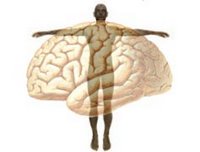 ffirm or deny a theory regarding the relationship between the mind and the body.
Descartes’ Dualism assumes that the mind is distinct from the body. This assumption further presupposes that (1) the mind and the body exist, (2) the mental processes, which exist due to the existence of the mind, exist apart from the physical processes, and (3) the activity of thinking, which cannot be taken from me, is an activity of the mind (or a mental process), and not of the body. Consequently, Descartes’ Dualism claims that the mental processes are distinct from the physical processes, wherein a mental process is defined as the process that exists in the mind, whilst physical process as that which exists in the body.
Following the path Descartes made, since I am a thinking thing, I do that which I do, because I am a thinking thing. My existence, which is made possible by my activity of thinking, made possible the things I do (physically). As such, my act of thinking, which is a mental process, made it possible for me to undergo physical activities implying that the mental could give rise to the physical.
The common counter-argument to this is that it is questionable to account that the mental (if it is non-physical) could give rise to a physical event. If the mind is non-physical as how Descartes believes it to be, then it must be something that has no position in space and no corporeal nature. If it were so, it would indeed be questionable to say that physical activities (or that which my body does), which has a corporeal nature and a position in space, arise from this non-physical entity. However, it could be the case that we would find the impossibility of the mind-body distinction more acceptable because of our inclination to the Science of Psychology; that due to the influence of Science, we may attribute the mental processes to physiological events that are physical processes in themselves. This could be the case if our enquiry on the mind-body distinction would be limited to our enquiry on ourselves (as human beings). If we extend this to the existence of God based on Leibniz’ arguments, we could find an argument that supports the immateriality of the mind.
According to Leibniz, because I am a thinking thing, the one who made me must also be a thinking thing, for it is absurd that a non-thinking thing makes a thinking thing such as me. This thinking thing that made me must be immaterial, as Leibniz thought that ‘God as a material being’ is absurd. We must accept that if God is a thinking thing, it is impossible for Him to be composed of matter or of atoms that do not think in themselves. It would be unsound to say that a great thinking thing that made me is composed of matter that does not think in its own right. This argument supports the idea that thinking is not an attribute of the physical and thus, if it is an attribute of the mind, then the mind must be non-physical.
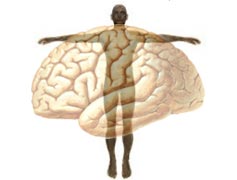 ffirm or deny a theory regarding the relationship between the mind and the body.
Descartes’ Dualism assumes that the mind is distinct from the body. This assumption further presupposes that (1) the mind and the body exist, (2) the mental processes, which exist due to the existence of the mind, exist apart from the physical processes, and (3) the activity of thinking, which cannot be taken from me, is an activity of the mind (or a mental process), and not of the body. Consequently, Descartes’ Dualism claims that the mental processes are distinct from the physical processes, wherein a mental process is defined as the process that exists in the mind, whilst physical process as that which exists in the body.
Following the path Descartes made, since I am a thinking thing, I do that which I do, because I am a thinking thing. My existence, which is made possible by my activity of thinking, made possible the things I do (physically). As such, my act of thinking, which is a mental process, made it possible for me to undergo physical activities implying that the mental could give rise to the physical.
The common counter-argument to this is that it is questionable to account that the mental (if it is non-physical) could give rise to a physical event. If the mind is non-physical as how Descartes believes it to be, then it must be something that has no position in space and no corporeal nature. If it were so, it would indeed be questionable to say that physical activities (or that which my body does), which has a corporeal nature and a position in space, arise from this non-physical entity. However, it could be the case that we would find the impossibility of the mind-body distinction more acceptable because of our inclination to the Science of Psychology; that due to the influence of Science, we may attribute the mental processes to physiological events that are physical processes in themselves. This could be the case if our enquiry on the mind-body distinction would be limited to our enquiry on ourselves (as human beings). If we extend this to the existence of God based on Leibniz’ arguments, we could find an argument that supports the immateriality of the mind.
According to Leibniz, because I am a thinking thing, the one who made me must also be a thinking thing, for it is absurd that a non-thinking thing makes a thinking thing such as me. This thinking thing that made me must be immaterial, as Leibniz thought that ‘God as a material being’ is absurd. We must accept that if God is a thinking thing, it is impossible for Him to be composed of matter or of atoms that do not think in themselves. It would be unsound to say that a great thinking thing that made me is composed of matter that does not think in its own right. This argument supports the idea that thinking is not an attribute of the physical and thus, if it is an attribute of the mind, then the mind must be non-physical.
However, Leibniz’ line of argument is also questionable. Though it is able to come up at the idea that thinking is a non-physical process, it still presupposes the reliability of “causation”; it presupposes the necessity of the existence of a thinking thing that made a thinking thing such as me. But what if the idea of causation is false? – Then we could possibly[1] disregard that God is a thinking thing or that even God is. Furthermore, should we, of necessity, assume that a God as a thinking thing should not be composed of matter that does not think in its own right? Lastly, if the thinking thing that made me is solely immaterial, how can we grant its existence in material reality? How can a thing work in a material reality if it does not exist there?
At any rate, it seems easy for Descartes to arrive at an idea that the mind is distinct from the body; that the existence of the body is dubitable, whilst that of the mind is not, making the body only as an extension of my existence. Arguing along his path, if my two hands would be taken away from me, I would still be thinking. Such would still be the case if one will take away from me my ears, my feet, my eyes, nose, liver and lung (which made Descartes believe that thinking is the only attribute that cannot be taken from me). But if one takes away my brain and slices it into pieces, would I still be able to think? I suppose not.
Even if it could be proven that my act of thinking is independent of the other parts of my body (or of other physical processes), it does not follow that it is independent of some of my physical processes. It is actually hard to conceive of mental processes as independent of my brain. I neither disagree with Descartes’ Dualism as I admit, I may have been mistaken, nor fully agree with the materialist theories. It is just that Descartes’ arguments are insufficient and that the arguments of materialist theories are influential. As of now, I am inclined[2] to think that the mental processes, which includes thinking and are said to occur in the mind, are just identical with the neurophysiological processes happening in my brain – thus, I am inclined to think that the physical activities I do are caused by mental processes, which are also physical processes.
[1] a logical possibility, not a logical necessity.
[2] That I am inclined to this sort of thinking does not mean that I am affirming the truthfulness of the claim that ‘the mental processes are nothing but physical processes’. This is more of a critique than an affirmation of a claim.
Saturday, January 21, 2006
Demanding an Ontological Answer
a reply to: When we ask what knowledge really is, we demand an ontological answer. Is this possible? Why or why not? Why are  ontological questions difficult to answer?
More often than not, philosophers demand an ontological answer to the question on what knowledge is. This is because in wanting to understand the nature of knowledge (or Knowledge, if ever there is an absolute one), most philosophers would consider as an imperative the activity of looking for the is-ness of knowledge (or Knowledge, whichever one wants) than looking for examples that could be considered as knowledge. In the former, what is being sought is the being (if there is such) or the real meaning of knowledge; that in the question “What is knowledge?”, the demand is to look for the identity and not for the mere description of knowledge that, on the other hand, could be the result of merely giving examples. As such, if “Knowledge is X” is the ontological answer to the question, then the “X”, more than a descriptive account, is the identity of knowledge. The relational tool “is” is used to explicate identity – that if we translate the statement, it would be this: Knowledge = X.
Searching for an ontological answer would require going beyond the obvious so that there will be an enquiry regarding what is within the knowledge itself. It is commonly thought that to reach the ontological is to examine only the transcendental or that which is beyond the obvious. But it would also require examining the obvious as the case could be like what Pirsig, in his Zen and the Art of Motorcycle Maintenance, is saying: “The Truth knocks on the door, and you say ‘Go away, I’m looking for the Truth’, and so it goes away”. The is-ness is composed of both the obvious and the not. From here, we could see the need for demanding an ontological answer so as to have an investigation that would examine both the obvious and the not. We may be blinded by both the familiar and the transcendental (or the obvious and the not).
The answer to the question “Is this possible?” is “Yes” if what is meant by the term “this” is our demand to arrive at an ontological answer. We can always demand to fly, to turn ourselves into frogs or to arrive at an ontological answer whether or not we can fly, turn ourselves into frogs and arrive at an ontological answer. The act of demanding is different to getting an ontological answer.
Likewise, if the term “this” means the “ontological answer”, the answer is “Yes” for the question is about possibility. To say that a thing is possible is not incompatible to saying that it is not possible. Even if we change the question to “Is there an ontological answer (in terms of knowledge)?”, the answer will always have to be “Yes” because if we say that there is none, we also say that knowledge does not exist – that if “X” in “Knowledge is X” does not exist, then Knowledge does not exist. To say so is not only problematic but also logically impossible since our act of enquiring itself into the nature and meaning of knowledge implies that there is indeed knowledge, whether absolute or not. If what others mean when they say, “Knowledge does not exist” is that “What we call knowledge is merely a belief”, it still does not follow that knowledge does not exist because in this claim, the term “knowledge” has a meaning, and that meaning is “belief”. If it does have meaning, it must, first and foremost, exist.
Lastly, if “Is this possible?” means “Is arriving at an ontological answer possible?”, the answer will be “Yes” because, again, the question deals with possibility. But if the question is “Can we arrive at an ontological answer?”, my answer would be neither a “yes” nor a “no”, but an “I don’t know”. To arrive at such is like to reach the top of a mountain ten times higher than Mt. Everest. Likewise, to claim that we arrive at an ontological answer is being a pseudo-intellectual as it is the case that we are limited in terms of sense perception and of understanding things. However elitist we are when it comes to our views, we are only taking leaps of faith.
At any rate, demanding for an ontological answer that would lead to searching for it is a healthy task. Our enquiry on both the obvious and the not would be the best method to at least overcome the blindness brought about by the familiar and the transcendental.
 ontological questions difficult to answer?
More often than not, philosophers demand an ontological answer to the question on what knowledge is. This is because in wanting to understand the nature of knowledge (or Knowledge, if ever there is an absolute one), most philosophers would consider as an imperative the activity of looking for the is-ness of knowledge (or Knowledge, whichever one wants) than looking for examples that could be considered as knowledge. In the former, what is being sought is the being (if there is such) or the real meaning of knowledge; that in the question “What is knowledge?”, the demand is to look for the identity and not for the mere description of knowledge that, on the other hand, could be the result of merely giving examples. As such, if “Knowledge is X” is the ontological answer to the question, then the “X”, more than a descriptive account, is the identity of knowledge. The relational tool “is” is used to explicate identity – that if we translate the statement, it would be this: Knowledge = X.
Searching for an ontological answer would require going beyond the obvious so that there will be an enquiry regarding what is within the knowledge itself. It is commonly thought that to reach the ontological is to examine only the transcendental or that which is beyond the obvious. But it would also require examining the obvious as the case could be like what Pirsig, in his Zen and the Art of Motorcycle Maintenance, is saying: “The Truth knocks on the door, and you say ‘Go away, I’m looking for the Truth’, and so it goes away”. The is-ness is composed of both the obvious and the not. From here, we could see the need for demanding an ontological answer so as to have an investigation that would examine both the obvious and the not. We may be blinded by both the familiar and the transcendental (or the obvious and the not).
The answer to the question “Is this possible?” is “Yes” if what is meant by the term “this” is our demand to arrive at an ontological answer. We can always demand to fly, to turn ourselves into frogs or to arrive at an ontological answer whether or not we can fly, turn ourselves into frogs and arrive at an ontological answer. The act of demanding is different to getting an ontological answer.
Likewise, if the term “this” means the “ontological answer”, the answer is “Yes” for the question is about possibility. To say that a thing is possible is not incompatible to saying that it is not possible. Even if we change the question to “Is there an ontological answer (in terms of knowledge)?”, the answer will always have to be “Yes” because if we say that there is none, we also say that knowledge does not exist – that if “X” in “Knowledge is X” does not exist, then Knowledge does not exist. To say so is not only problematic but also logically impossible since our act of enquiring itself into the nature and meaning of knowledge implies that there is indeed knowledge, whether absolute or not. If what others mean when they say, “Knowledge does not exist” is that “What we call knowledge is merely a belief”, it still does not follow that knowledge does not exist because in this claim, the term “knowledge” has a meaning, and that meaning is “belief”. If it does have meaning, it must, first and foremost, exist.
Lastly, if “Is this possible?” means “Is arriving at an ontological answer possible?”, the answer will be “Yes” because, again, the question deals with possibility. But if the question is “Can we arrive at an ontological answer?”, my answer would be neither a “yes” nor a “no”, but an “I don’t know”. To arrive at such is like to reach the top of a mountain ten times higher than Mt. Everest. Likewise, to claim that we arrive at an ontological answer is being a pseudo-intellectual as it is the case that we are limited in terms of sense perception and of understanding things. However elitist we are when it comes to our views, we are only taking leaps of faith.
At any rate, demanding for an ontological answer that would lead to searching for it is a healthy task. Our enquiry on both the obvious and the not would be the best method to at least overcome the blindness brought about by the familiar and the transcendental.
Saturday, November 05, 2005
Thursday, October 13, 2005
An Enquiry on the Nature of Meaning
 1. On the Purpose and Method
1.1 The central aim of this enquiry is to investigate meaning in complex situations – where there are what we call partial- and double- meaning statements; to examine sentences that implicates more than what is literally uttered.
1.2 To attain the aim, it is essential to enquire on the nature of meaning and start the analysis on it in simple situations – where sentences implicates only what was uttered.
1.3 This enquiry will not deal only with statements (spoken and written), but also with speech acts. As stated in my previous essay (in the take home exam), speech acts may be either voluntary (the performer of the act is aware that he’s doing something to convey a meaning) or involuntary (the performer is unaware of his act, yet his intention is still manifested in the act).
1.4 In referring to the speaker of the statement or the performer of the act, I will use the term originator (to designate that the statement/act came from him), to the hearer or receiver, receiver (to designate that he is the receiver of the statement/act that has a meaning), to the statement or act, utterance. In examining the meaning, the utterance is the one being judged, not the originator’s capability to utter it or the receiver’s capability to understand it.
2. On the Distinction between the Problems of Truth and Meaning and On Meaningfulness
2.1.1 The Problem of Meaning is distinct from the Problem of Truth: The latter deals with the external world, the former only with the language (the attempt of man to express and communicate the objects of his thought, including his perception of the external world, to others). The Question on Truth (especially of a statement) entails the Question on Meaning for it is necessary to examine the utterance and know how it is used in the language in order for it to be compared to the external world (and to ask the Question on Truth).
2.1.2 The Question on Meaning, however, does not entail the Question on Truth.
2.2.1 Most people think that the Question on Meaning entail the Question on Truth; that to ask the meaning of the utterance, Snow is white is to compare it to the external world and see whether there exists a snow that is white. Such thought is brought about by failure to recognize the complexity of language and by analyzing language by only using simple utterances that are empirically verifiable (such as Snow is white). If we would only recognize the distinction, we would not verify the existence of a white snow if we are only about to ask the meaning of Snow is white. The meaning of such is different from its truth – value.
2.2.2 Clearly, to ask the meaning of something does not entail asking that something’s truthfulness or existence in the external world. (The nature of Truth had been discussed on my previous essay). The utterance Snow is white could never mean this: There is a snow that exists that is white or If X is a snow, then X exists and X is white. Rather, it means this: If there is a snow, then such is white or If X is a snow, then X is white. It is just a matter of an if – then situation wherein the antecedent (the if) does not need to exist to imply the consequent (the then) and wherein such if – then situation can be uttered by the originator and can be grasped by the receiver/s (or by those in the linguistic community).
2.2.3 In the same manner, the utterance Dogs have wings is meaningful (capable of having a meaning), whether or not dogs exist or they indeed have wings (if they exist). Meaningfulness of an utterance depends on the linguistic community. An utterance is meaningful if it is said to be communicable.
2.2.4 Communicability (capability of being communicable) of an utterance is of two components: the utterance’s utterability and the utterance’s understandability. An utterance has utterability if it is capable of being uttered or being delivered by the originator, and has understandability if t is capable of being understood or comprehended by the receiver. An utterance is understandable if the receiver (who is from the same linguistic community as the originator) is able to grasp the if – then situation connected to the utterance (or if the receiver is able to picture the logical possibility of such).
2.2.5 Considering such, not all mere utterances are meaningful. The utterance Ba is We[1] is meaningless as it is not understandable by the receiver (and hence, not communicable). I, as the originator, could not even utter such with a thought that others in the linguistic community would understand such. I cannot even picture an if – then situation of Ba is We as there are no words as Ba and We in the linguistic community where I will utter it, which shows us that Ba and We have no functions in the linguistic community.
2.2.6 And Wittgenstein was right in stating that Private language is impossible. No one can ever invent the words Ba and We and say that Ba is We has a meaning in isolation from his linguistic community.
2.3.1 That the meaningfulness and thus, meaning, is dependent on the linguistic community would be better understood with the Idioms as example.
2.3.2 There is certainly no need to compare Idioms with the external world (or know their Truthfulness). Idioms have meanings that are derived from the individual words and as such, referential theory (particularly, ostensive definition) will certainly not be applicable for in pointing to the referent of individual words, different meaning could be gained.
2.3.3 The French idiom Il n’y a pas de quoi would have a different meaning if referential theory would be used. If such theory will be used, we have to focus on its literal meaning (It has not there if what) and not on how that idiom functions in the French linguistic community.
2.3.4 Such idiom’s meaning (You’re Welcome) is known to the French linguistic community to where it is used. Clearly, the meaning of an idiom depends not on how it is connected to its literal referent (or on how it relates to the external world) but on how such idiom functions in a particular linguistic community.
2.3.5 Arguably, I, who am not part of the French linguistic community, may find the given idiom meaningless for in the first place, I cannot utter it as I do not understand it and do not even know its function in the linguistic community. Likewise, if I am to deliver it to a receiver from a linguistic community different from the French linguistic community, no one will understand it. Even if the receivers and I are from the same linguistic community, if none of us understand French, then the given idiom will just remain as an utterance for us.
3. On Meaning
3.1.1It is to be noted that I, through this course of enquiry, am making revision regarding my previous account on meaning (on my previous essay).
3.1.2 Different from my previous account, meaning is not solely what the originator wants to convey that the receiver must grasp. It is not solely the intention of the originator or what he wants to express in uttering the utterance. Meaning is the function of the utterance in a linguistic community.
3.2.1 Intention refers to the thought of the originator that is the basis of the utterance (whether a statement or a speech act). It is what drives the performance of the utterance. E.g. (statement) My intention or thought that All swans are white made me utter the statement All swans are white; (speech act) my intention to bid goodbye made me wave my hand so as the receiver would understand that I’m bidding goodbye.
3.2.2. Meaning cannot be the intention for if it is, then it is only dependent to the originator (the possessor of the intention).
3.2.3 To accept meaning as the intention is to accept the possibility of a private language. Likewise, all of my utterances would be meaningful (even if they are not communicable).E.g. I can invent words such as Ba and We and utter Ba is We to express the intention Grass is green. Such utterance would be meaningful if this is the case.
3.2.4 However, we cannot accept the possibility of private language because meaningfulness depends on the linguistic community (as previously discussed). And by virtue of the Rule of Inference, Modus Tollens, we could negate that the meaning is the intention (as we have to negate the possibility of private language).
3.3.1 Meaning of an utterance must be the function of such utterance in the linguistic community (or in the communication between the originator and the receiver as the smallest linguistic community is the communication between one originator and one receiver).
3.3.2 To better understand this, think again of the discussion on idioms.
3.3.3 An utterance could have a function (or meaning) in the existence of the following: the utterance and the intention.
3.3.4 Definitely, an utterance would have no meaning if such utterance has not been uttered at all (or in the absence of the utterance). Likewise, there would be no utterance if there has not been an intention (where such utterance is based) at all. Hence, albeit meaning is not the intention, intention is still important in order for an utterance to have a meaning.
3.3.5 But not all utterances have functions. Thus, to speak of functional or meaningful utterances is to speak of utterances that are communicable.
3.3.6 The communicability of an utterance does not depend on the grammatical rules just like in idioms or on the physical possibility of the utterance just like in the statement, Dogs have wings. Again, communicability depends on utterability and understandability.
4. On Partial- and Double- Meaning utterances
4.1.1 Understandability needs further investigation. Where it refers to the ability of the receiver/s to grasp the function being played by the utterance, it could be the case that there could be different interpretations on the function. It could be the case that the receiver might only partially understand the utterance’s function.
4.1.2 This might be similar to Frege’s concept of the sense (only that he argues that the meaning is the referent while I argue that meaning is the function that can be partially understood). Different receivers of an utterance could have a coherent picture of the utterance but their interpretations differ as they have differences in perspectives.
4.2.1 To confuse the receiver/s, there are originators who utter utterances in conversations wherein such utterances do not entirely function as they normally should in a linguistic community (even if originators know the normal function[2] of such utterances).
4.2.2 In such conversations, it could be said that such utterances partially functions their normal function (or that such has a partial function or partial meaning). E.g. On a conversation with a friend, I uttered Thanks as my last word. My intention for such was not to convey the normal function of Thanks, but it would somehow be alright for me if my friend would think of such as the Thanks in its normal function. With such, I am somehow thanking him without indeed thanking him and vice versa.
4.2.3 However, is it really the case that an utterance can partially function (perform) its function? Arguably, it can not.
4.2.4 A single term could have different functions (depending on the linguistic communities that use it). Yet, if this term had already become an utterance (had already been used by the originator in order to communicate), it must have performed only one function. It cannot, when already uttered, function two functions (the normal function on one hand and the function ascribed to it by the originator, on the other) at the same time as it is based only on one whole intention.
4.2.5 Hence, an utterance cannot partially mean (function) its normal meaning (function). If it is not used in its normal sense then its meaning (or the function that it performs) is necessarily the function ascribed to it by the originator. It could not be the case that we partially mean something. We may partially imply something, but not partially mean something. Meaning is not the implication of our utterances, rather the function that it (and that it must) play in a particular linguistic community.
4.2.6 In such manner, my stating of Thanks cannot partially mean that I am thanking and/or partially mean that I am thanking not. Its function must be (one) whole as it is based on one (whole) intention. It could be the case that my stating of Thanks is just a part of my sentence construction in indicating that I respect the one who I’m talking to. In such case, it does not (and can not) mean Thanks in the normal sense. On the contrary, my friend would understand this if we are in the same linguistic community wherein terms such as Thanks and the like do not function as they normally do, but function as a part of sentence construction in respecting a person.
4.2.7 Following the same path, it would be absurd to utter Jokes are half-meant (if we are to take it literally).
4.3.1 The case on what we call partial-meaning statements is similar to the case on double meaning statements. It is often the case that if a person would want an utterance to partially mean something, he ascribes other sort of function to such utterance making that utterance seemingly has double-meaning.
4.3.2 Such is the case wherein the originator wants to implicate more that what is literally said. But as previously argued, meaning is not the implication/s of the utterance. It is simply the utterance’s function.
4.3.2 The intent to have a double-meaning utterance is also due to having more than one intentions. In a case where there is more than one intention, there will also be more than one utterance. E.g. My intentions are: (1) to state that I am happy, and (2) but I am indeed not. My utterances would be: (1) The statement, I am happy, and (2) My manner of saying it sarcastically served as a speech act implying that I am not happy.
4.3.3 Likewise, if the receiver of such utterances does not grasp of the intention I am not happy as he did not notice my manner of saying I am happy sarcastically (or my speech act), it would not make my utterance I am happy meaningless. It may be the case that the function of the utterance I am happy is unknown to him due to his inability to grasp the intention that I simply just want to state such utterance and his inability to notice my second utterance. In such case, the meaning of the utterance I am happy is unknown to him, yet such utterance is still meaningful.
4.3.4 Meaning and meaningful are different. If the meaning is not grasped, it would not mean that it is not meaningful. Meaning or Function is connected to the intention and utterance (and in the existence of other utterances, we would notice that the originator intend not to use the normal function of the utterance). Meaningfulness, however, is connected to the communicability. Meaningfulness is just the capability to have a meaning, not the meaning itself. Inability to grasp the function does not mean that the utterance does not have a function (or able to have a function) in a linguistic community.
4.3.5 It would seem absurd to say that an utterance has a double meaning (just like in the case of green jokes). To suppose that such has would only lead to futile confusions.
5. Defense of the Method of Enquiry
5.1 Albeit the enquiry aims to enquire on the issue of partial- and double- meaning utterances, the Question on meaning and its distinction with the Question on Truth is of necessity to be discussed. It is important to point out that in searching for the real meaning of the so called partial- and double- meaning utterances, we do not necessarily search for the Truthfulness of such utterances.
5.2 It would be preposterous if one would argue against this enquiry and say that my search for the meaning of partial- and double- meaning utterances had lead to the search for its Truth (or Truthfulness). This enquiry is a search for the Truth concerning such utterances, not a search for the meaning/s of such utterances as doing so would mean giving all such utterances as examples and search their real meanings or functions. This work had been a search for the Truth and seeking for the real meaning of certain apparent partial- and double- meaning utterances (through examples) had only served as means to help me search for Truth. Moreover, as I previously stated, the Question on Truth entails the Question on Meaning (but not vice versa).
5.3 Though it is stated that a private language is not possible, others might argue against this work due to my invention of terms such as communicability, utterability, and understandability that might seem as an indicator of a private language. Again, it would be preposterous to do such. Such terms are still anchored and had been explained using the natural language (English language) that would make the linguistic community (the speakers of the natural language) understand such terms. Hence, it is not a case that I am having a private language. My utterances here are capable of being understood by my intended audience (receiver) – the philosophers of language.
6. Since this is a part of my search for Truth: As long as language evolves and as my mind works, albeit this work is done, my enquiry on the nature of meaning would end not.
[1] This utterance had often been used as an example by our group in PHLO 120 class (Philosophical Reasoning) on our discussion on the Philosophy of Language.
[2] How the utterance is normally used in a linguistic community. E.g. kissing the hand of a parent normally functions as a form of respect. To ascribe another function to it is to perform such speech act sarcastically to mean that kissing the hand is a form of disrespect.
Making vs. Discovery: Art vs. Philosophy?
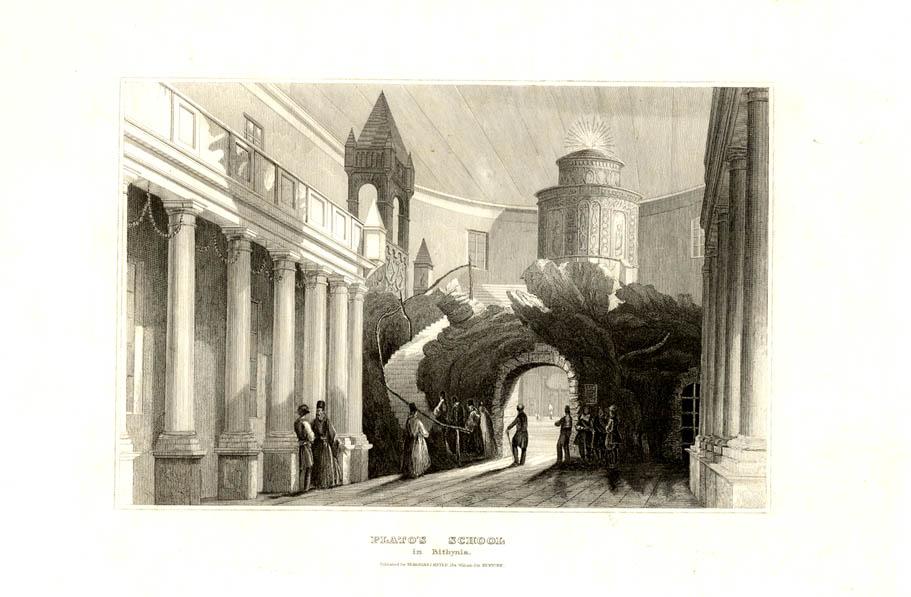 Plato’s attack on art, particularly on poetry, is obvious on his dialogue, Republic, wherein he stated that it is third from the truth (will be discussed later). His line stating that there is a “quarrel between philosophy and poetry” (607b5-6) apparently discriminates poetry. However absurd it may seem, Plato himself wrote poetically. His works are in form of dialogues that narrate a number of allegories and myths.
In defense of this, it may be argued that Plato wrote in this manner in order to better persuade the readers. He probably wanted to remain loyal to the philosophical inquiry, that’s why he narrated what happened in the form of dialogues and not in the form of treatises. However, it would again seem absurd that he, who was attacking poetry and/or art for being imitative, wrote of dialogues that are themselves imitations of the philosophical inquiries. If pure philosophizing is not about reiterating, and rather searching for the truth, then Plato’s method could be considered as the negation of pure philosophizing. This may be the reason why Socrates, if he really existed, wrote nothing.
In order to understand Plato’s remark regarding the “quarrel”, we have to understand what he meant by poetry. Would his critique on poetry apply only to Homer’s works? Or would it also apply to William Shakespeare’s, to Edgar Allan Poe’s or to Percy Bysshe Shelley’s? Would it apply to the works of the modern day poets who consider themselves as lovers of both philosophy and literature? If we are to examine clearly Plato’s philosophy, we could say that this quarrel is not restricted to the battle between philosophy and poetry per se, but could also be extended to the battle between philosophy and other forms of art.
Plato is not saying that poetry is contradictory with philosophy because it is poetry. One reason why Plato was against poetry is probably because it is a form of rhetoric. So the quarrel is not just about the professional jealousy between the philosophers and poets of the ancient times. If there was a professional jealousy, it must be between philosophers and sophists. It just so happened that there were poets that Plato considered as sophists.
Rhetoric, which refers to the persuasive use of language to influence the thoughts of the audience, has been often disapproved by those who consider themselves as lovers of philosophy. Rhetoric is mere persuasion. Often times, it is insincere. To better understand this, consider as an example the art of debating. I call debate as an art as it needs skills and cleverness more than knowledge (in Plato’s terms, skills and cleverness are to art, while knowledge is to philosophy). In debate, the debater must persuade his audience and adjudicators through defending his side of the house (or his position) whether he believes it or not. In a debate tournament, you do not search for truth. Defending a position in debate does not necessarily mean defending one’s own view. Debaters defend their position because they want their house to win, not because they really hold the position. Though argumentation is important in a debate tournament, this sort of argumentation is used only to support an already existing claim, not in order to search for truth. The “ability to argue well” in a debate, if we will speak in Plato’s (or Socrates’) terms, is not part of philosophizing. It is a part of persuading, or of rhetoric. This is one contemporary example of the quarrel between philosophy and rhetoric.
For the purpose of this essay, it is good not to restrict the term rhetoric to speeches (as it is technically limited to speeches). Let me extend rhetoric to persuasive writings as such writings capture the essence of rhetoric. The only difference is that rhetoric in its technical sense refers to speeches. This rhetoric that which I am referring to is better not to be given to professors of Philosophy, rather to professors of English (of Speech Communication and Literature) for Philosophy professors are for the pursuit of knowledge while English professors are for teaching the persuasion techniques. If what Plato means with poetry (in quarrel with philosophy) is this rhetoric that I am talking about, then he was probably arguing against sophists (and not against mere poets).
Surely rhetoric and sophistry are not one and the same. A sophist, in the ancient times, is “a scholar or thinker, especially one skillful in devious argumentation”[1]. It is derived from the Greek word, sophos[2] meaning skilled or clever. Plato was against sophists because they were mere rhetoricians, and, like the poets whom he was referring to, sophists are clever in explaining the “is” (appearance), deceiving the audience that the “is” they were talking about is the real “Is” (Form). Yet, they do not really know the “Is”. The poets Plato spoke of (or the sophists) teach only the appearances that are third from the truth.
At this point, we may ask which, between the rhetorician and the sophist, is harmful. The rhetorician is the clever one; the sophist, the deceiver (as he is a teacher). With this, we may say, that it is the sophist that is more harmful. How about the rhetorician? Is his being clever harmful? If he is harmful due to his cleverness in persuading (that means he can also deceive), would that mean that all of rhetoric is a bad thing? If the answer is “yes” then this essay is harmful as this tends to persuade the readers. However, is this merely rhetoric? I would say no. This essay aims to search and explain for the true quarrel between philosophy and art (if there really is one). With this, I can say, that not all of rhetoric are harmful. There are also those that are in pursuit of knowledge (just like Plato’s dialogues that though poetical and rhetoric, aim at the pursuit of knowledge).
If this is so, the quarrel Plato was referring to was not only about philosophy vs. art of rhetoric. We have a reason now to extend the discussion on other forms of art (or on art as a whole), so as to say that the quarrel is between philosophy and art per se. It is obvious in the Republic that Plato was against art as it is an “imitation” (mimesis). As previously discussed, poets, as well as other artists, do not know the Form/s and thus, when they create something, their creation will not be in accordance to the Form/s, rather only to (or an imitation of) the appearance of the Forms. What they can grasp is only the image of the Form (that they can grasp through their senses). And knowing only this, this image is the only thing they can imitate (making their creation third from the truth). With this, we could say that the artist is only using the lowest part of his soul – the appetitive part that merely uses the senses. Such is also the reason why Plato (through Socrates) stated in the Republic that poets (artists) must not be admitted to the kallipolis. They, through their cleverness (or rhetoric skills), can deceive the guardians.
As aforementioned, artists make or create something. The quarrel between philosophy and poetry must also refer to the quarrel between philosophy and art (or making). The word “poetry” came from the Latin word, poēta, which means poet. “Poet” came from the Greek word, poiein, which means to make or to create[3]. For this reason, we could say that Plato was referring to art as a whole or to the process of making itself. This disapproval to the process of making is due to the reason that the artists (or the makers) only make appearances that are only based on appearances of the Form/s, not on the Form/s itself. If we would look at it clearly, this is contradictory with Plato’s (and/or Socrates’) notions of philosophy and of Truth. For Plato, the Truth is to be discovered, not to be made. It exists outside our minds, and hence, philosophy is the search for (or the discovery of) this Truth.
There’s a good reason to believe that the quarrel is about the differences in terms of processes and of views between philosophy and art. Art is a process of making while philosophy is a process of discovery. Such art vs. philosophy or making vs. discovery can also be expressed as appearance vs. Form, imagination vs. rationality, creative thinking vs. critical thinking, and expression of ideas vs. search for Truth. Plato’s disapproval of the rhetoric is due to its focus more on the exhibition of cleverness (in persuasion) than on the pursuit of knowledge. Such “old quarrel” that Plato was referring to roots from this difference in art and philosophy: art is focused on making; philosophy, on search or discovery of Truth.
If this is the case, then the quarrel must exist until now since art is still a process of making, and philosophy, of discovery. Look around us and we can see different forms of exhibition of cleverness. Surely, not all exhibition of cleverness (or persuasion) are apart from the discovery or search for Truth. As I aforesaid, this essay might be an exhibition of cleverness or of persuasion, yet, this aims to search for Truth (the truth regarding the “old quarrel”). If Plato were alive today, he will go against those that are exhibited in our television. Certainly, he will not disapprove of the shows that aim at True knowledge such as those in the Discovery Channel or Knowledge Channel. His critique on art is not restricted to mere exhibition of cleverness. Plato is against those that exhibit cleverness but does not aim at knowledge. Examples of such are shows that exhibit “tsismis” (gossips), pornography etc. That is the reason is why Plato is in want of censorship in the kallipolis.
It is not the mere cleverness in art that made Plato disapprove of it. Art, for him (based on my analysis), will tend to mislead us. Art has a tendency to merely satisfy the pursuits of our body, not of our souls (though there are philosophers who think differently). As for Plato, since art is more of a process of making than of discovery, it corrupts our soul.
Art’s process of making involves imagination or creating an idea that appears to be the “Is”. Philosophers do not create ideas this way. They search for the Idea (Truth).
[1] Reader’s Digest Universal Dictionary, First Edition, 1987.
[2] Ibid.
[3] Ibid.
Plato’s attack on art, particularly on poetry, is obvious on his dialogue, Republic, wherein he stated that it is third from the truth (will be discussed later). His line stating that there is a “quarrel between philosophy and poetry” (607b5-6) apparently discriminates poetry. However absurd it may seem, Plato himself wrote poetically. His works are in form of dialogues that narrate a number of allegories and myths.
In defense of this, it may be argued that Plato wrote in this manner in order to better persuade the readers. He probably wanted to remain loyal to the philosophical inquiry, that’s why he narrated what happened in the form of dialogues and not in the form of treatises. However, it would again seem absurd that he, who was attacking poetry and/or art for being imitative, wrote of dialogues that are themselves imitations of the philosophical inquiries. If pure philosophizing is not about reiterating, and rather searching for the truth, then Plato’s method could be considered as the negation of pure philosophizing. This may be the reason why Socrates, if he really existed, wrote nothing.
In order to understand Plato’s remark regarding the “quarrel”, we have to understand what he meant by poetry. Would his critique on poetry apply only to Homer’s works? Or would it also apply to William Shakespeare’s, to Edgar Allan Poe’s or to Percy Bysshe Shelley’s? Would it apply to the works of the modern day poets who consider themselves as lovers of both philosophy and literature? If we are to examine clearly Plato’s philosophy, we could say that this quarrel is not restricted to the battle between philosophy and poetry per se, but could also be extended to the battle between philosophy and other forms of art.
Plato is not saying that poetry is contradictory with philosophy because it is poetry. One reason why Plato was against poetry is probably because it is a form of rhetoric. So the quarrel is not just about the professional jealousy between the philosophers and poets of the ancient times. If there was a professional jealousy, it must be between philosophers and sophists. It just so happened that there were poets that Plato considered as sophists.
Rhetoric, which refers to the persuasive use of language to influence the thoughts of the audience, has been often disapproved by those who consider themselves as lovers of philosophy. Rhetoric is mere persuasion. Often times, it is insincere. To better understand this, consider as an example the art of debating. I call debate as an art as it needs skills and cleverness more than knowledge (in Plato’s terms, skills and cleverness are to art, while knowledge is to philosophy). In debate, the debater must persuade his audience and adjudicators through defending his side of the house (or his position) whether he believes it or not. In a debate tournament, you do not search for truth. Defending a position in debate does not necessarily mean defending one’s own view. Debaters defend their position because they want their house to win, not because they really hold the position. Though argumentation is important in a debate tournament, this sort of argumentation is used only to support an already existing claim, not in order to search for truth. The “ability to argue well” in a debate, if we will speak in Plato’s (or Socrates’) terms, is not part of philosophizing. It is a part of persuading, or of rhetoric. This is one contemporary example of the quarrel between philosophy and rhetoric.
For the purpose of this essay, it is good not to restrict the term rhetoric to speeches (as it is technically limited to speeches). Let me extend rhetoric to persuasive writings as such writings capture the essence of rhetoric. The only difference is that rhetoric in its technical sense refers to speeches. This rhetoric that which I am referring to is better not to be given to professors of Philosophy, rather to professors of English (of Speech Communication and Literature) for Philosophy professors are for the pursuit of knowledge while English professors are for teaching the persuasion techniques. If what Plato means with poetry (in quarrel with philosophy) is this rhetoric that I am talking about, then he was probably arguing against sophists (and not against mere poets).
Surely rhetoric and sophistry are not one and the same. A sophist, in the ancient times, is “a scholar or thinker, especially one skillful in devious argumentation”[1]. It is derived from the Greek word, sophos[2] meaning skilled or clever. Plato was against sophists because they were mere rhetoricians, and, like the poets whom he was referring to, sophists are clever in explaining the “is” (appearance), deceiving the audience that the “is” they were talking about is the real “Is” (Form). Yet, they do not really know the “Is”. The poets Plato spoke of (or the sophists) teach only the appearances that are third from the truth.
At this point, we may ask which, between the rhetorician and the sophist, is harmful. The rhetorician is the clever one; the sophist, the deceiver (as he is a teacher). With this, we may say, that it is the sophist that is more harmful. How about the rhetorician? Is his being clever harmful? If he is harmful due to his cleverness in persuading (that means he can also deceive), would that mean that all of rhetoric is a bad thing? If the answer is “yes” then this essay is harmful as this tends to persuade the readers. However, is this merely rhetoric? I would say no. This essay aims to search and explain for the true quarrel between philosophy and art (if there really is one). With this, I can say, that not all of rhetoric are harmful. There are also those that are in pursuit of knowledge (just like Plato’s dialogues that though poetical and rhetoric, aim at the pursuit of knowledge).
If this is so, the quarrel Plato was referring to was not only about philosophy vs. art of rhetoric. We have a reason now to extend the discussion on other forms of art (or on art as a whole), so as to say that the quarrel is between philosophy and art per se. It is obvious in the Republic that Plato was against art as it is an “imitation” (mimesis). As previously discussed, poets, as well as other artists, do not know the Form/s and thus, when they create something, their creation will not be in accordance to the Form/s, rather only to (or an imitation of) the appearance of the Forms. What they can grasp is only the image of the Form (that they can grasp through their senses). And knowing only this, this image is the only thing they can imitate (making their creation third from the truth). With this, we could say that the artist is only using the lowest part of his soul – the appetitive part that merely uses the senses. Such is also the reason why Plato (through Socrates) stated in the Republic that poets (artists) must not be admitted to the kallipolis. They, through their cleverness (or rhetoric skills), can deceive the guardians.
As aforementioned, artists make or create something. The quarrel between philosophy and poetry must also refer to the quarrel between philosophy and art (or making). The word “poetry” came from the Latin word, poēta, which means poet. “Poet” came from the Greek word, poiein, which means to make or to create[3]. For this reason, we could say that Plato was referring to art as a whole or to the process of making itself. This disapproval to the process of making is due to the reason that the artists (or the makers) only make appearances that are only based on appearances of the Form/s, not on the Form/s itself. If we would look at it clearly, this is contradictory with Plato’s (and/or Socrates’) notions of philosophy and of Truth. For Plato, the Truth is to be discovered, not to be made. It exists outside our minds, and hence, philosophy is the search for (or the discovery of) this Truth.
There’s a good reason to believe that the quarrel is about the differences in terms of processes and of views between philosophy and art. Art is a process of making while philosophy is a process of discovery. Such art vs. philosophy or making vs. discovery can also be expressed as appearance vs. Form, imagination vs. rationality, creative thinking vs. critical thinking, and expression of ideas vs. search for Truth. Plato’s disapproval of the rhetoric is due to its focus more on the exhibition of cleverness (in persuasion) than on the pursuit of knowledge. Such “old quarrel” that Plato was referring to roots from this difference in art and philosophy: art is focused on making; philosophy, on search or discovery of Truth.
If this is the case, then the quarrel must exist until now since art is still a process of making, and philosophy, of discovery. Look around us and we can see different forms of exhibition of cleverness. Surely, not all exhibition of cleverness (or persuasion) are apart from the discovery or search for Truth. As I aforesaid, this essay might be an exhibition of cleverness or of persuasion, yet, this aims to search for Truth (the truth regarding the “old quarrel”). If Plato were alive today, he will go against those that are exhibited in our television. Certainly, he will not disapprove of the shows that aim at True knowledge such as those in the Discovery Channel or Knowledge Channel. His critique on art is not restricted to mere exhibition of cleverness. Plato is against those that exhibit cleverness but does not aim at knowledge. Examples of such are shows that exhibit “tsismis” (gossips), pornography etc. That is the reason is why Plato is in want of censorship in the kallipolis.
It is not the mere cleverness in art that made Plato disapprove of it. Art, for him (based on my analysis), will tend to mislead us. Art has a tendency to merely satisfy the pursuits of our body, not of our souls (though there are philosophers who think differently). As for Plato, since art is more of a process of making than of discovery, it corrupts our soul.
Art’s process of making involves imagination or creating an idea that appears to be the “Is”. Philosophers do not create ideas this way. They search for the Idea (Truth).
[1] Reader’s Digest Universal Dictionary, First Edition, 1987.
[2] Ibid.
[3] Ibid.
Wednesday, September 28, 2005
conversation 101
 i just read franco's blog... he summarizes our conversation at a dinner in kfc (after our PHLO 174 class). this is actually an extension and a reaction, as well, of and to his point of view regarding the topics that were discussed in our conversation (& i call that particular conversation, conversation 101).
 that night, we became politicians (in its truest sense). to be a politician does not always mean to have a position in office, one is a politician because he participates well in his society, and participating implies knowing and understanding the present situation of the society while stating what's "ought" to be the case... and i think that's what we did. we stated our sentiments... our views regarding the present issues and problems this country is facing. we also stated what we want for this country... we stated the ideal (in contrast with the real). the "is" is compared with the "ought". well so much with that... reality tells us that having a doctorate in philosophy is (seemingly) subordinate with having a degree in law. well, in a third world country such as Philippines, people would tend to look for the direct utility, and such could not be found in having a doctorate in philosophy. masses look for practicality. come to think of it, how much money would you get with such doctorate degree? Unless you own a business or you govern a university, you'll earn much money (i think). but if not, well... you'll really earn much money with a degree in law. but why should this be the case? why should people base the value and usefulness of something with the money that we get from it? the truth is, having a degree in philosophy is not subordinate with having a degree in law, nor having a degree in law is subordinate with having a degree in philosophy... it is the mediocre that is subordinate from the excellent (and you cannot see that mediocrity with just looking at the degree the person has earned, you could see that with looking at the whole of him).
it is very sad to think that people do not see the value of philosophy. it is further sad to think that people lose hope; that there's no sense of thinking with the ideal because reality is far from it. it is sad to think that there are people that deprive us of hoping for a bright future... for they are taking the future of this county as only their future, & not our future... sometimes, i think that i am unlucky of being a filipino... that the philippines is not worth dying for. but that should not be the case. why lose hope?... i am still here. kc, florence, franco and i are still here for this country (& i realized that in our conversation 101). young as we are, we believe that we can make a difference... ANG KABATAAN AY DI LAMANG PAG-ASA NG BAYAN. DAPAT, NGAYON PA LANG, ANG KABATAAN AY MAAASAHAN NA.
Friday, September 23, 2005
just this...
the following are those that i had posted in my friendster account (i have nothing to write as of now. this is my first time here in the blogger).
on the seekers and brutes
those who seek the truth are men of reason. those who devoid the former of the truth are brutes...
the brutes are blind. the light that should be sought will not follow them, nor come from them. they hate the light and devoid the men of reason of knowing it... devoid the men of reason, who are not neighbors but mates of them, of the light, of the sun, of the truth.
nonetheless, the fact that these brutes have reason cannot be denied. they are called brutes, yet, they're humans. but it is also a fact that the men of reason or the seekers of the truth see that such group of brutes do not use this reason that they have. that is why the author understands now why the seekers think that the brutes are stupid.
------------
they who are called brutes
they, whom the author refers to as brutes, are called as such as they are not seen as lovers of reason and of true wisdom...
they, who are called brutes, are called as such, not because they dub the seekers of truth as animals, but because they do act like brutes whenever they are in front of the seekers...
they, who are called brutes, are called as such for they really appear as such.
they, who are called brutes, are called as such, despite of friendship, for they look at a friend as a traitor tainted with what they see the infectious thoughts of others...
they, who are called brutes, are still the author's friends inspite of the pain brought by being seen as a traitor in friendship...
they, who are called brutes, are only called as brutes... brute is just a name. the author does not claim that they really are. but, they, who are called as such, must beware of their actions. their actions might turn them from human to brutes. after all, supidity helps in making one as a brute... & stupidity, well, they kinda have that.
-------
a tu mi CIRCULO DE SABIDURIA
It must not only be known, rather, also understood, that...
it is not your name that keeps you alive,
it is not your fame that strengthens your soul,
it is not your appearance that made you great,
it is not the silence that must prevail when one desires truth that is being hidden by someone; when one cries for justice...
Circulo de Sabiduria, you do not get your existence from your name. You do not need your fame to keep your principles. You do not have to appear good to others in order to be good inside... in order to have arete. You must embrace justice and virtue.
Circulo de Sabiduria, your principles are the reason for your existence. It is your telos. It is your principles, not your fame, that made you. Let yourself not be deceived by your appetitive part. Your highest part, your reason must reign. Mi circulo, you must free yourself from injustices. In that way, you would not only be good inside, but also good outside... Reach your arete...
A tu mi circulo, mi circulo... mi amor... what had happened to you? Plato is right, your parts contradict each other. Mi circulo, your reason must reign. In critical cases, your reason must reign..
Subscribe to:
Posts (Atom)